

This guide covers what’s actually true today: which storage decision you’re really facing depending on which headset you’re buying, how much space the operating system eats up before you install a single game, current game file sizes, and what your options are if storage runs out. If you’re comparing 128 vs 256 vs 512 GB across the whole Meta Quest lineup, here’s everything you need to know.
Meta Quest storage has gotten more confusing, not less. The Quest 3 used to come in 128GB and 512GB, the Quest 3S launched with 128GB and 256GB, and older headsets each had their own lineup. Then Meta discontinued the 128GB Quest 3 entirely in late 2024, which means a lot of what’s written about “Quest 3 storage” online is now describing a headset you can’t actually buy new anymore.
Meta Quest Storage Options in 2026
Not every Meta Quest headset actually gives you a storage choice anymore.
Meta Quest 3S: 128 vs 256 GB
The Quest 3S is the one headset where 128 vs 256 GB is still a real decision you’ll make at checkout. Meta’s own storage FAQ confirms it: “Meta Quest 3S will be available in two storage options: 128GB and 256GB.”
If you’re mostly playing a handful of games at a time and don’t plan on keeping a big media library on the headset, 128GB is workable. If you want more breathing room without stepping up to a full Quest 3, 256GB is the safer buy. We break this down further in the Do You Need 128GB, 256GB, or 512GB? section below.
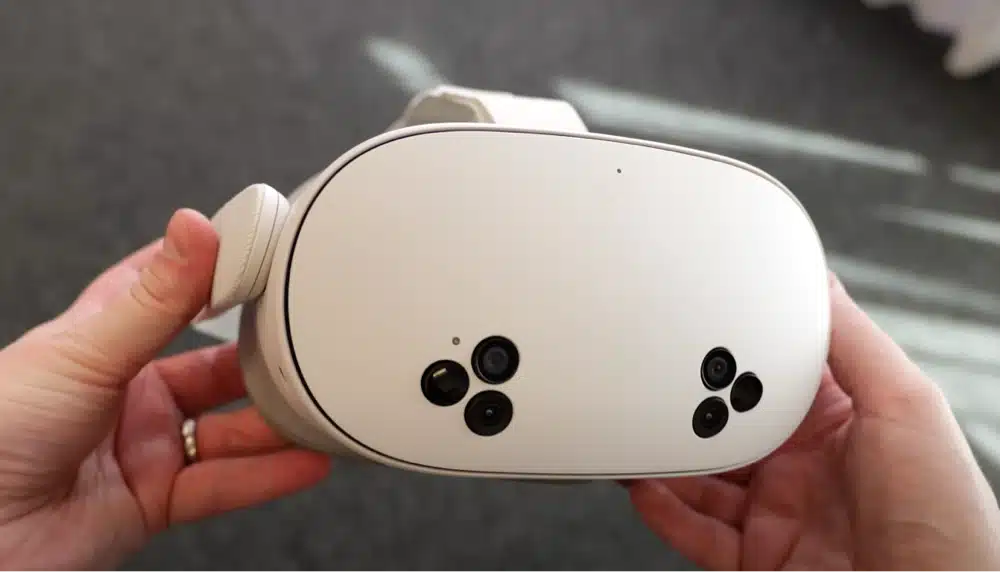
Meta Quest 3: Now 512GB Only
If you’ve seen older articles (including previous versions of this one) comparing “Meta Quest 3 128 vs 512 GB,” here’s the update: that comparison no longer applies to new purchases. Meta discontinued the 128GB Quest 3 in September 2024 and dropped the price on the 512GB model to take its place as the only configuration. Meta’s own product page confirms it directly: “Meta Quest 3 is currently available in one storage option: 512GB.”
So if you’re buying a Quest 3 new today, there’s no storage decision to make. Every unit sold now is 512GB, which is worth knowing if you were holding out for a cheaper 128GB model. There isn’t one anymore. If you want a lower-cost Meta headset with a genuine size choice, that’s what the Quest 3S is for.
If you already own a 128GB Quest 3 from before the discontinuation, nothing changes for you. It works exactly the same, it’s just no longer sold new. Everything in this guide about usable space, game sizes, and freeing up storage still applies to your headset.
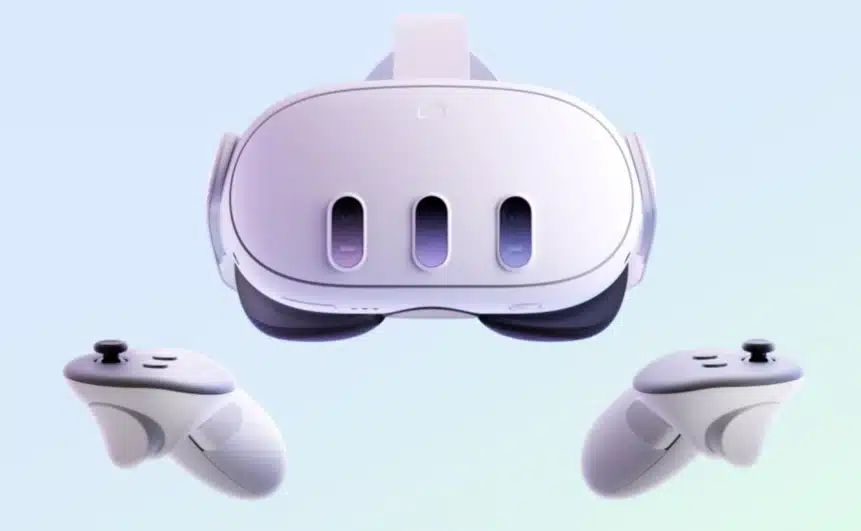
Meta Quest 2 (Discontinued): 128 vs 256 GB
The Meta Quest 2 shipped in 128GB and 256GB configurations before Meta discontinued it in favor of the Quest 3S. You can still find used or old-stock units for sale, and if you’re deciding between a secondhand 128GB or 256GB Quest 2, the same logic applies as the Quest 3S: 128GB is fine for a lighter game library, 256GB gives you more room for media and a bigger rotating library of installed games.
An earlier 64GB Quest 2 model also existed early on but was phased out as VR game sizes grew.
Meta Quest Pro (Discontinued): 256GB Only
The Meta Quest Pro launched in a single 256GB configuration and was never offered in other sizes. Meta discontinued the Quest Pro in September 2024, with sales winding down in early 2025, so there’s no storage decision to make here either. If you find one secondhand, 256GB is what you’re getting.
Original Oculus Quest (Legacy): 64 vs 256GB
The original Oculus Quest from 2019 came in 64GB and 256GB versions. It’s long discontinued and unsupported for most current-generation VR titles, so this is really only relevant if you’re troubleshooting an old unit rather than buying new.
See our full comparison of every Meta Quest headset if you’re deciding between generations rather than just storage size.
Do You Need 128GB, 256GB, or 512GB?
Your answer depends less on which headset you’re buying and more on what you actually plan to load onto it. There are three types of content that eat up Quest storage:
- Official Games: Games bought directly from the Meta Store. These auto-update, so you always have the latest version installed.
- Unofficial Games: Since Quest runs on Android, you can sideload third-party APKs not on the official store, usually through SideQuest VR. These are often free or cheap, which makes it easy to load a lot of them without thinking about space.
- Media (Videos and Pictures): Personal videos, downloaded movies, or TV shows you want to watch in VR. Video files can run up to several gigabytes each and will eat through storage fast if you’re using your headset as a personal theater.
If you’re a casual gamer who plays two or three titles at a time and doesn’t store media, 128GB is genuinely enough, you can just uninstall and redownload games you’re not actively playing. If you keep a large rotating library, play storage-heavy AAA titles regularly, or want to store movies and shows for offline viewing, step up to the next size. 512GB (only available on the Quest 3 now) is really aimed at people who don’t want to manage storage at all.
Actual Usable Storage After the Operating System
Whatever storage size is printed on the box, you get less than that in practice. The operating system, pre-installed apps, and system reserves take a real bite out of it, and that bite has grown over time as Meta Horizon OS has added features.
Early Quest 3 units reserved around 8 to 10GB for the system. VR outlets like Virtual Reality Society now measure closer to 18 to 26GB of system usage, depending on your software version and headset. That means a 128GB Quest 3S realistically gives you somewhere around 100 to 110GB of usable space, not the full 128GB, and the same math applies proportionally to every other size.
You can check your own headset’s exact numbers any time by going to Settings > Storage inside your Quest, which shows a live breakdown of system space vs. what’s actually free.
Meta Quest Game Sizes
Game size is where most of your storage actually goes. Android Central’s review of 50 Quest Store games found an average install size of around 2GB, but the biggest AAA titles run far larger. Here’s how some current games stack up:
| Game | Storage Size Required |
|---|---|
| Asgard’s Wrath 2 | 31.4 GB |
| Skydance’s BEHEMOTH | 26.28 GB |
| Metro Awakening | 17.94 GB |
| Batman: Arkham Shadow | 18.3 GB |
| GOLF+ | 11.35 GB |
| Arizona Sunshine 2 | 11.17 GB |
| The Walking Dead: Saints & Sinners | 7.54 GB |
| Bonelab | 6.51 GB |
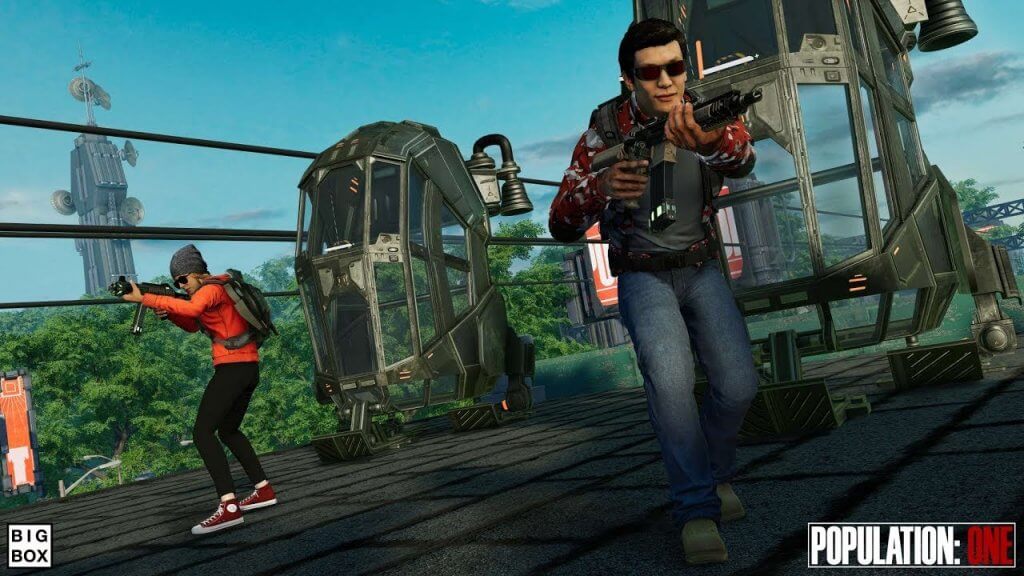
| Population: ONE | 6.27 GB |
| Blade and Sorcery: Nomad | 5.68 GB |
| Dungeons of Eternity | 3.16 GB |
| Rec Room | 2.01 GB |
| Superhot VR | 1.96 GB |
| Job Simulator | 1.73 GB |
| Thrill of the Fight 2 | 1.62 GB |
| Gorilla Tag | 1.58 GB |
| Beat Saber | 1.36 GB |
| Among Us VR | 1.25 GB |
| Meta Horizon Worlds | 1.23 GB |
| VRChat | 850 MB |
| Roblox | 263 MB |
At those sizes, a 128GB headset with roughly 100GB usable fits somewhere between 4 to 6 of the biggest AAA titles at once, or dozens of lighter games like Beat Saber or Gorilla Tag.
If you regularly play storage-heavy titles like Asgard’s Wrath 2 or Batman: Arkham Shadow alongside a rotating library of other games, that’s when 256GB or 512GB starts to matter.
Can You Expand Meta Quest Storage?
No. Internal storage on every Meta Quest headset is fixed at purchase and can’t be upgraded later. Whatever size you buy is what you’re stuck with for the life of the headset.
Like other Android devices, Quest headsets do support external storage through the USB-C port. It’s not ideal for gaming, since it’s noticeably slower than internal storage, but it can work for storing media files. Keep in mind the USB-C port can’t be used for external storage and charging (or Quest Link) at the same time, so you’ll want a charging dock or separate cable setup if you plan on using it regularly.
Freeing Up Space on Your Meta Quest
If storage is already tight, the quickest fix is uninstalling games you’re not actively playing. SideQuest VR lets you back up your save data first, so you can reinstall a game later and pick up right where you left off instead of losing progress.
We cover the full step-by-step process, including backing up save data, clearing cached files, and managing what auto-updates, in our dedicated guide: Meta Quest Storage Management: How to Free Up Space and Optimize Your VR Headset.
Frequently Asked Questions
Is 128GB enough for Meta Quest 3S?
For most casual users, yes. If you play a handful of games at a time and don’t store media on the headset, 128GB is workable. If you want a bigger rotating library or plan to store video, go with 256GB.
Do you need 512GB on Meta Quest 3?
You don’t have a choice anymore, every new Meta Quest 3 ships with 512GB. If you’re asking whether that much space is necessary, it’s more than enough for nearly everyone, including large game libraries and offline media.
Is the Meta Quest 3 128GB discontinued?
Yes. Meta discontinued the 128GB Meta Quest 3 in September 2024. New units now ship exclusively in 512GB. Existing 128GB headsets already sold continue to work normally.
Can you expand Meta Quest storage?
Not internally. Storage is fixed at the size you purchase. You can connect external storage through the USB-C port for media, but it’s not recommended for installing games.
What’s the difference between Meta Quest 3 and 3S storage?
The Quest 3 now ships in a single 512GB configuration. The Quest 3S gives you a choice between 128GB and 256GB, making it the more budget-flexible option if you don’t need the Quest 3’s higher-end display and want to control cost through storage size.
Final Verdict: Which Storage Size Should You Buy?
If you’re buying a Quest 3S and mostly play a few games at a time, 128GB will serve you fine, just get comfortable occasionally uninstalling and redownloading titles. If you want more breathing room, plan to store media, or don’t want to think about storage management at all, go with 256GB.
If you’re buying a Quest 3, there’s nothing to decide: every new unit is 512GB, which is plenty of room for a large game library plus offline video.
Whatever you land on, remember that backing up save data and uninstalling unused games through SideQuest VR means storage is more flexible than the number on the box suggests. You’re rarely stuck.
What size Meta Quest did you buy, and has it been enough? Let us know in the comments below.