

In this comparison guide, I’ll go through the Steam Machine vs Steam Deck OLED in detail to help you decide which portable gaming PC is better to buy.
Related: The best games to play on the Steam Deck and Steam Machine!
Steam Machine Overview
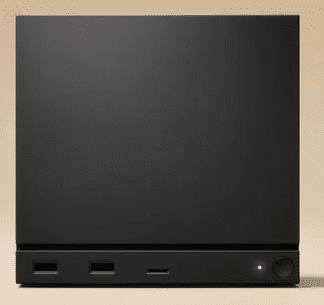
The Steam Machine is a compact, living-room-friendly gaming PC designed to run SteamOS seamlessly. Designed as a compact, mini PC desktop unit, it aims to offer a console-like experience while still providing players with the flexibility of PC gaming.
Valve positions the Machine as a more powerful, plug-and-play alternative to handheld devices like the Steam Deck, especially for gamers who prefer a stationary setup. The system focuses on quiet cooling, easy setup, and smooth integration with your Steam Library.
The Steam Machine serves as a bridge between traditional gaming desktops and modern home-console experiences.
Key Specs
- CPU: Semi-custom AMD Zen 4 (6 cores / 12 threads)
- GPU: Semi-custom AMD RDNA 3 (28 Compute Units)
- Memory: 16 GB DDR5 system RAM + 8 GB GDDR6 VRAM
- Storage: 512 GB or 2 TB NVMe SSD, plus microSD expansion
- Operating System: Steam OS 3
- Video Outputs: DisplayPort 1.4 and HDMI 2.0
- USB Ports:
- 2× USB-A 3.2 (front)
- 2× USB-A 2.0 (rear)
- 1× USB-C 3.2 (rear)
- 2× USB-A 3.2 (front)
- 2× USB-A 2.0 (rear)
- 1× USB-C 3.2 (rear)
- Networking: Wi-Fi 6E, Bluetooth 5.3, Gigabit Ethernet
- Power: Internal power supply
- Dimensions: 152 mm (H) × 162.4 mm (D) × 156 mm (W)
- Weight: ~2.6 kg
- Other Features: Customizable 17-LED front RGB light strip
How to Buy
Valve will sell the Steam Machine on their official website.
Click here to check the latest status of the Steam Machine.
Steam Deck OLED Overview
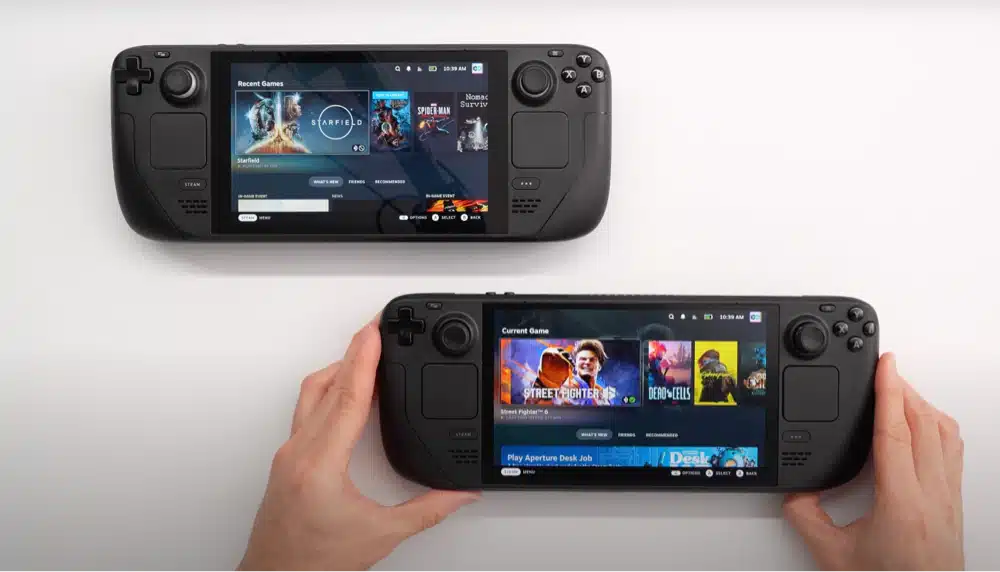
The Steam Deck is a PC gaming handheld developed and launched by Valve Corporation in early 2022. It is battery-powered and comes with a 7-inch screen. You can play most games from the Steam store on the deck and over 9,000 titles are officially supported. The OLED version of the Deck is the same as the original, but with a full OLED screen display.
The Deck has a full controller scheme, two haptic mousepads, and four configurable rear buttons. This gives you the flexibility to play games in whatever format you want.
The Deck is also popular for game emulation. You can load emulators and ROMs onto it and play downloaded games from nearly any console. Playstation 2 games and anything earlier than that work really well on the console. Some PS3 and Nintendo Switch games are also supported. Nintendo Switch games also work great!
There are different Steam Deck accessories on the market that you can purchase to improve your gaming experience, including screen protectors and protective cases.
How to Buy
The top way to buy the Steam Deck OLED is officiall from Valve. They don’t sell the device directly on other retailers like Amazon, so beware of fake sellers.
Click here to buy the Steam Deck OLED.
Steam Machine vs Steak Deck OLED
Before you decide, let me go through the Steam Machine vs Steam Deck OLED in full detail!
Processor
The Steam Machine utilizes a semi-custom AMD Zen 4 processor, providing it with significantly more power for desktop gaming compared to the Steam Deck OLED’s custom AMD Zen 2 APU. In terms of raw performance, the Steam Machine’s processor is comparable to that found in the latest Xbox Series and PlayStation consoles, setting a new standard for living room gaming devices.
While the Steam Deck OLED’s chip is optimized for handheld efficiency and low power draw, the Steam Machine’s processor is designed for sustained higher performance in a stationary setup.
Essentially, the Steam Machine operates like a console, providing a streamlined gaming experience that eliminates the complexity of a traditional PC. Users can expect smoother gameplay at higher resolutions and improved multitasking on the Steam Machine, with performance that is expected to rival that of other leading gaming consoles.
Graphics Card
The Steam Machine includes a semi-custom RDNA 3 GPU with more compute units and higher thermal capacity than the handheld-focused RDNA 2-based chip in the Steam Deck OLED. The Deck’s GPU is built for 720p–800p mobile gaming efficiency, while the Steam Machine’s larger GPU performance makes 1080p and 4K gaming far more achievable.
Overall, the Steam Machine delivers notably stronger graphical performance and better support for modern visuals.

RAM
The Steam Machine separates system memory and video memory, offering 16 GB of DDR5 RAM plus 8 GB of dedicated GDDR6 VRAM. By contrast, the Steam Deck OLED utilizes 16 GB of unified LPDDR5 memory, shared between the CPU and GPU.
This gives the Steam Machine an advantage in bandwidth and multitasking, as well as more consistent performance in graphically demanding games.
Storage Options
Steam Machine models come with larger SSD options, typically 512 GB or 2 TB NVMe, along with a microSD slot for additional expansion. The Steam Deck OLED is available in 512 GB or 1 TB models, depending on the edition, and features its own microSD expansion slot.
While both devices offer flexible storage, the Steam Machine’s higher-capacity NVMe options and easier upgradability make it a more suitable choice for large desktop Steam game libraries.
Controls
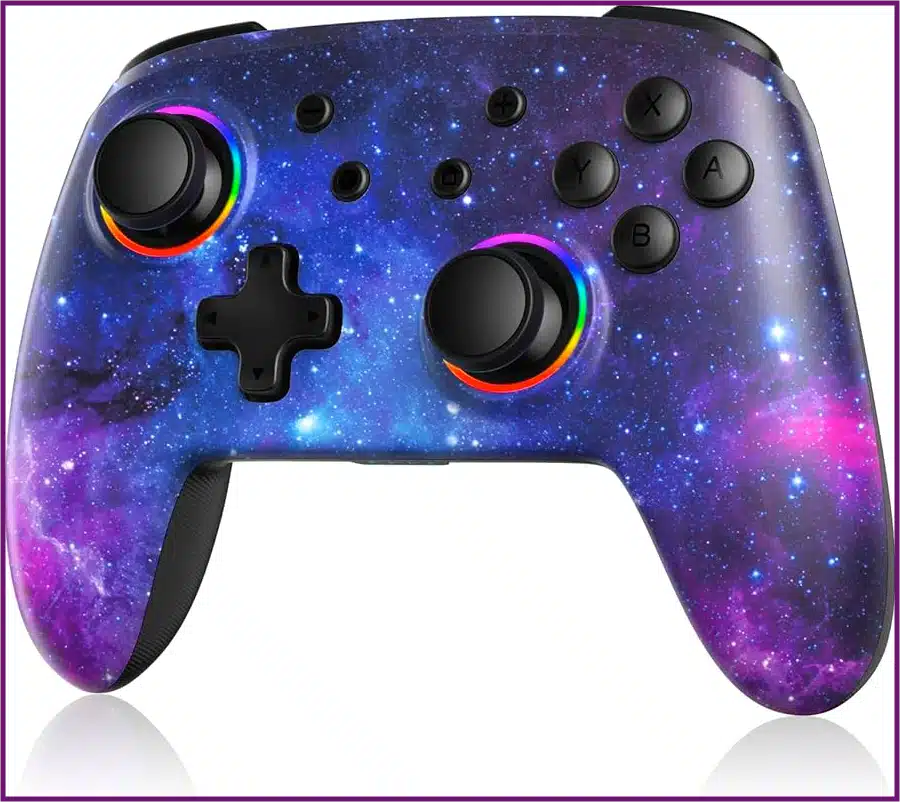
The Steam Machine supports external controllers, including the Steam Controller (2025 version), Xbox controllers, DualSense, and other Bluetooth or USB options. The Steam Deck OLED, on the other hand, features built-in controls including thumbsticks, trackpads, triggers, and a touchscreen, making it playable straight out of the box for handheld gaming.
In terms of convenience, the Deck wins for portability, but the Steam Machine offers more customization for living-room or desk setups.
Accessories
As a stationary device, the Steam Machine pairs with monitors, keyboards, mice, controllers, and VR headsets, functioning like a compact gaming PC. It also supports a variety of USB and Bluetooth devices without additional docking hardware.
The Steam Deck OLED supports many of the same accessories, but typically requires a dock or hub to achieve full desktop functionality.
Who Should Buy the Steam Machine?
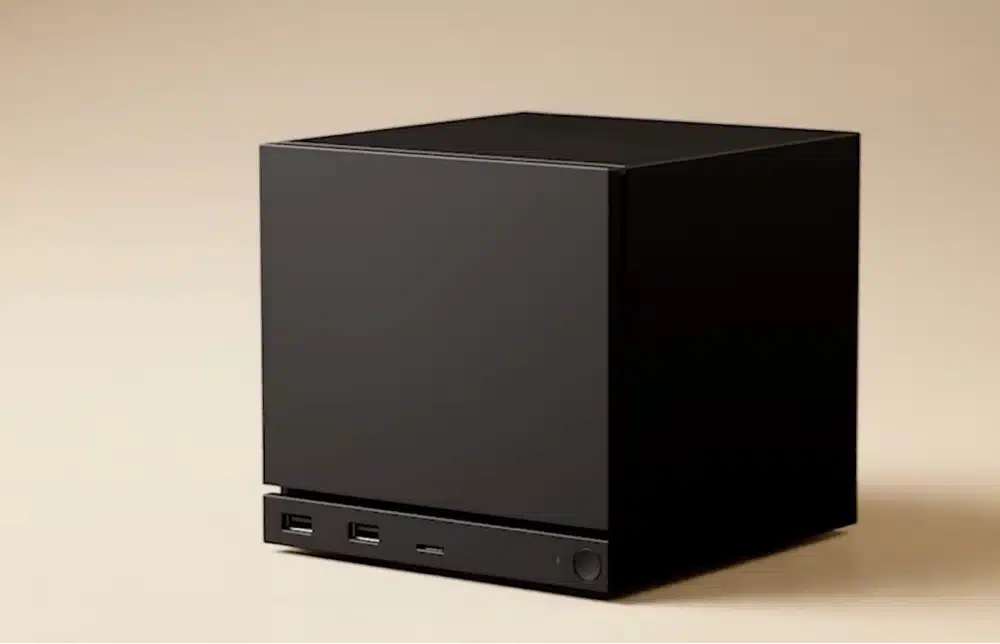
If you’re someone who wants a powerful, yet simple-to-use gaming PC for your living room or desktop without the hassle of building one, the Steam Machine is definitely a compelling choice. Compared to gaming PCs, laptops, and consoles, the Steam Machine offers a unique blend of performance, convenience, and ease of setup for playing your favorite PC games.
You can expect a smooth playing experience with modern Steam titles at high settings, console-like convenience, and the flexibility to use a wide range of controllers and accessories.
It also appeals to users who care about future upgradability and are building a desktop-like environment without investing in or managing a complete custom PC build. On the other hand, if you travel often or prioritize portability, handhelds may be a better fit. If you don’t already have a screen or controller, the Steam Machine may not be as practical. For those who require even more power in the future, a Steam Machine Pro may be a viable option to consider.
Who Should Buy the Steam Deck OLED?
The Steam Deck OLED is part of a new generation of handhelds, making it the perfect pick for gamers who are always on the go or prefer a truly portable gaming experience. It excels at playing your favorite pc game titles without sacrificing access to your full Steam library.
The built-in controls on the Steam Deck OLED, plus high-contrast OLED screen and efficient better battery life make it ideal for long train rides, flights, or just lounging on the couch without needing a TV or monitor to play PC games.
It’s also great for people who enjoy casual PC gaming in shorter bursts, with the option to dock later for a more traditional setup. As it’s purpose-built for handheld use, it’s especially well-suited for players who value mobility, convenience, and the ability to pick up and play wherever they are.

Which Machine is More Powerful? Steam Machine vs Steam Deck OLED
The Steam Machine is significantly more powerful than the Steam Deck OLED, especially when it comes to sustained performance. Compared to the Steam Deck’s original model, the Steam Machine’s specs deliver over six times faster performance, thanks to its 6-core Zen 4 CPU and a semi-custom RDNA 3 GPU. The primary difference lies in raw power, but there are also significant differences in design and intended use between these devices.
With its improved hardware, this Steam console can more comfortably target higher-resolution gaming, including 4K with upscaling, and handle demanding games more easily. The Steam Machine also supports ray tracing, which enhances graphics quality but can impact frame rates depending on the game and settings. When comparing GPU performance, the Steam Machine is positioned closer to the Xbox Series and PlayStation consoles, offering a more console-like experience in the living room.
Meanwhile, the Steam Deck OLED is optimized for power efficiency and portability. Its APU has a lower TDP (4–15 W) and shares memory between CPU and GPU, which constrains its raw throughput compared to the Steam Machine.
In short, if you want raw power, better graphics, and a more desktop-like gaming experience, the Steam Machine is the stronger choice. If you value mobility, a lower price, and efficient handheld performance, the Steam Deck OLED is more than capable, but it’s not in the same performance class as the Steam Machine.