
This guide covers the best Apple Vision Pro alternatives you can buy (or preorder soon), including $349 headsets and lightweight AR glasses, and which one fits the way you’d actually use it.
I own an Apple Vision Pro, and I still think it has the best mixed reality experience on the market. But it now starts at $3,699 after Apple’s June price increase, it weighs 750 to 800 grams on your face, and the battery gets you about 2.5 hours. That’s a lot of money for a headset most people end up using for movies, a big virtual monitor, and a few apps.
The good news is that you can get most of that experience for a third of the price or less. Some of these picks are even better than Vision Pro at specific jobs, like gaming, working on a Windows PC, or watching movies on a plane.
Quick Summary: The Best Cheaper Apple Vision Pro Alternatives
- Best overall: Meta VR Glasses ($1,299.99, spring 2027). About 100 grams on your face, sharper per degree than Vision Pro, and it plays the whole Quest library.
- Best you can buy today: Samsung Galaxy XR ($1,799.99). The closest thing to Vision Pro on Android, with micro-OLED displays and eye tracking.
- Best value: Meta Quest 3 ($599.99). Full-color mixed reality and the biggest VR game library for a sixth of the price.
- Cheapest: Meta Quest 3S ($349.99). The same apps and games as Quest 3 for about a tenth of what Vision Pro costs.
- Best AR glasses: XREAL One Pro ($599). An 87-gram pair of glasses that gives you a giant screen for your laptop or phone.
People mostly leave Vision Pro over three things: the price, the weight, and being locked into Apple’s ecosystem. Every pick below fixes at least one of those.
- Quick Summary: The Best Cheaper Apple Vision Pro Alternatives
- Why Look for Apple Vision Pro Alternatives?
- Apple Vision Pro Competitors Compared: Price, Weight and Display
- 1. Meta VR Glasses (Best Overall Apple Vision Pro Alternative, Coming Spring 2027)
- 2. Samsung Galaxy XR (Best Android Apple Vision Pro Alternative You Can Buy Today)
- 3. Meta Quest 3 (Best Value Apple Vision Pro Alternative)
- 4. Meta Quest 3S (Cheapest Apple Vision Pro Alternative)
- 5. Play For Dream MR (Headset Most Like Apple Vision Pro)
- 6. Steam Frame (Best Apple Vision Pro Alternative for Windows and PC Gaming)
- 7. Bigscreen Beyond 2e (Best Lightweight PC VR Headset for Movies)
- 8. XREAL One Pro (Best Apple Vision Pro Glasses Alternative for Work)
- 9. Viture Beast (Best Glasses Like Apple Vision Pro for Movies and Travel)
- Glasses Like Apple Vision Pro: What AR Glasses Can and Can’t Do
- Best Apple Vision Pro Alternatives for Mac Users
- Upcoming Apple Vision Pro Competitors Worth Waiting For
- Will Apple Vision Pro Get Cheaper? What We Know About Apple Vision Air
- Should You Buy a Used or Refurbished Apple Vision Pro Instead?
- Frequently Asked Questions
- Which of These Apple Vision Pro Alternatives Should You Buy?
Why Look for Apple Vision Pro Alternatives?
Before you write off Vision Pro, it’s worth being fair about what it does well. Its displays and passthrough (seeing the room through its cameras) are still the most convincing I’ve used. Eye tracking and hand gestures work so well that you rarely think about them, and Mac Virtual Display turns my MacBook into a huge, sharp ultrawide screen just by looking at it.
The problems are just as real:
- Apple raised Vision Pro to $3,699 (256GB), $3,899 (512GB), and $4,199 (1TB) in June, blaming rising memory costs. Add ZEISS prescription inserts and AppleCare, and you’re past $4,000.
- It puts 750 to 800 grams on your cheeks and forehead, plus a 353-gram battery on a cable. In my experience, the weight ends most sessions before the battery does.
- The battery lasts up to 2.5 hours of general use, or 3 hours of video.
- Its game library is a fraction of what Quest or SteamVR offer, and most big VR hits aren’t on it.
- It works best with a Mac and an iPhone. Windows and Android users get far less out of it.
You’ll also see older lists recommend HoloLens 2, Valve Index, or Pico 4 Ultra. HoloLens 2 and Valve Index are no longer made, and Pico doesn’t sell its headsets in the US, so I’ve left them out.
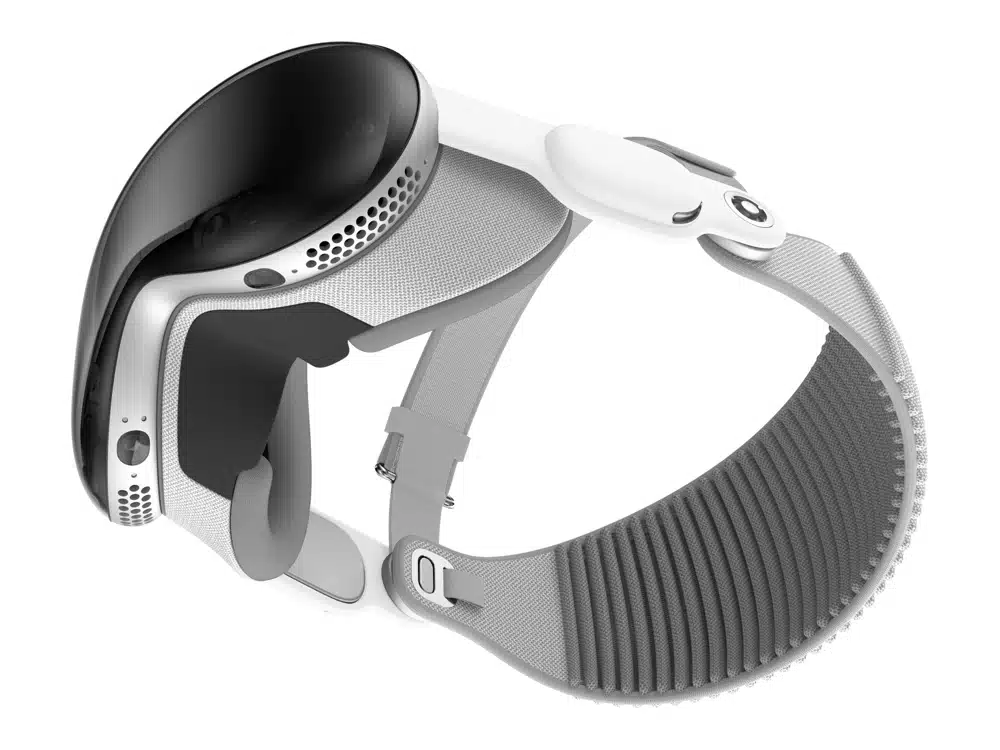
Apple Vision Pro Competitors Compared: Price, Weight and Display
Here’s how the top Apple Vision Pro alternatives compare on the specs that matter most day to day.
| Headset | Price | Type | Weight on your head | Display | Works best with |
|---|---|---|---|---|---|
| Apple Vision Pro (M5) | $3,699 | Standalone headset | 750 to 800g plus 353g battery | Micro-OLED, about 34 PPD | Mac, iPhone |
| Meta VR Glasses | $1,299.99 (spring 2027) | Standalone glasses plus puck | About 100g plus 300g puck | Micro-OLED, 37 PPD | Mac, Windows, Android, iPhone |
| Samsung Galaxy XR | $1,799.99 | Standalone headset | 545g plus battery pack | Micro-OLED, 3,552 x 3,840 per eye | Android, Windows (via Virtual Desktop) |
| Meta Quest 3 | $599.99 | Standalone headset | 515g | LCD, 2,064 x 2,208 per eye | Windows, Mac, Android, iPhone |
| Meta Quest 3S | $349.99 | Standalone headset | About 515g | LCD, 1,832 x 1,920 per eye | Windows, Mac, Android, iPhone |
| Play For Dream MR | $1,999 | Standalone headset | About 650g with strap | Micro-OLED, 3,840 x 3,552 per eye | Android, Windows (SteamVR streaming) |
| Steam Frame | From $1,059 | Standalone plus PC streaming | 440g | LCD, 2,160 x 2,160 per eye | Windows gaming PC |
| Bigscreen Beyond 2e | $1,159 | PC VR headset | 108g plus strap | Micro-OLED, 2,560 x 2,560 per eye | Windows gaming PC |
| XREAL One Pro | $599 | AR display glasses | 87g | Micro-OLED, 1080p per eye | Anything with USB-C video out |
| Viture Beast | $549 | AR display glasses | 88g | Micro-OLED, 1,920 x 1,200 per eye | Anything with USB-C video out |
Meta VR Glasses (Best Overall Apple Vision Pro Alternative, Coming Spring 2027)
Meta VR Glasses are the most direct Apple Vision Pro alternative anyone has announced, and they’re my top pick even though you can’t buy them yet. Meta unveiled them at Connect for $1,299.99, shipping in spring 2027. They look like a thick pair of sunglasses and weigh about 100 grams on your face, with the chip and battery moved into a 300-gram compute puck that clips to your pocket.
I had an early demo, and the weight difference is the thing you notice first. After years of Vision Pro pressing on my cheeks, wearing something that rests on nose pads like regular glasses felt like a different category of device. The micro-OLED displays run at 37 pixels per degree, a touch sharper than Vision Pro’s roughly 34, so small text in a browser or spreadsheet looks crisp.
And because they run Horizon OS, the same software as Quest, the entire Quest game library works on day one.

Meta VR Glasses Price and Release Date
Meta VR Glasses cost $1,299.99 in the US, including the puck and a 45W charger. Touch Plus controllers aren’t in the box, but you can reuse a pair from a Quest 3. Meta says they go on sale in spring 2027 in the US, UK, Canada, much of Europe, Japan, Korea, Australia, and a few other countries. Preorders aren’t open yet; you can sign up for launch news on Meta’s VR Glasses page.
Meta VR Glasses vs Apple Vision Pro
Meta wins on price (about a third of the cost), weight (100 grams against 750 to 800), sharpness, and games. Apple wins on field of view (about 100 degrees horizontal against 70), passthrough polish, and Mac integration. Battery life is close, with Meta rated at about 3 hours and Vision Pro at 2.5 to 3. I go through every spec in my full Meta VR Glasses vs Apple Vision Pro comparison.
Meta VR Glasses Pros
- About 100 grams on your face, so long movie and work sessions don’t wear you out
- Sharper per degree than Vision Pro (37 PPD)
- Plays the full Quest library, plus 75+ hand-tracked apps at launch
- Works as a virtual display for both Mac and Windows PCs, and accepts USB-C video from laptops and consoles
- Magnetic Zenni prescription inserts
Meta VR Glasses Cons
- You can’t buy them until spring 2027, and preorders haven’t opened
- 70-degree horizontal field of view feels more like a big window than being inside the scene
- The puck connects with a cable, so there’s still a wire running to your pocket
- Controllers are extra if you don’t already own a Quest
Samsung Galaxy XR (Best Android Apple Vision Pro Alternative You Can Buy Today)
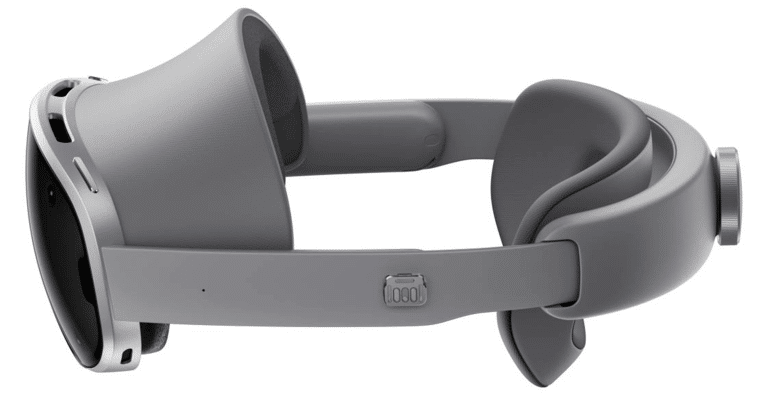
If you want a Vision Pro-class headset now, not next spring, Samsung Galaxy XR is it. It’s the first headset running Google’s Android XR, and on paper it’s the closest match to Vision Pro: 4K micro-OLED displays (3,552 x 3,840 per eye), eye tracking, hand tracking, and color passthrough, for $1,799.99. That’s about half the price of Vision Pro, and micro-OLED means the same deep blacks in a dark movie scene that make Vision Pro’s picture stand out.
It also fixes Vision Pro’s weight problem, at least partly. Galaxy XR weighs 545 grams including the rear strap, with the battery in a separate pack like Apple’s, and the forehead-rest design leaves your cheeks alone. Gemini is built in, so you can ask about whatever you’re looking at, and the Google Play Store gives you thousands of Android apps as floating windows, plus YouTube.
Galaxy XR Price
Galaxy XR is $1,799.99 for the 256GB model at Samsung. The motion controllers are $250 extra, and you’ll want them for most VR games. Samsung’s travel case is another $250.
Galaxy XR vs Apple Vision Pro
Galaxy XR matches Vision Pro on display type and input style at about half the price, and it’s lighter. Vision Pro still has the more polished software, better passthrough, and much deeper Mac and iPhone integration. Battery life is a little shorter on Samsung (about 2 hours of general use, or 2.5 hours of video). If you use an Android phone and a Windows PC, Galaxy XR is the better fit. I compare them in more depth in Samsung Galaxy XR vs Apple Vision Pro M5.
Galaxy XR Pros
- Micro-OLED displays with eye and hand tracking, the closest spec match to Vision Pro
- About half the price of Vision Pro
- Google Play Store apps, Gemini, and YouTube built in
- Works with Windows PCs through Virtual Desktop ($25) for PC VR games
Galaxy XR Cons
- Controllers cost another $250
- About 2 hours of battery life for general use
- Android XR’s library of true 3D apps is still small
- Less useful if you’re deep in Apple’s ecosystem
3. Meta Quest 3 (Best Value Apple Vision Pro Alternative)
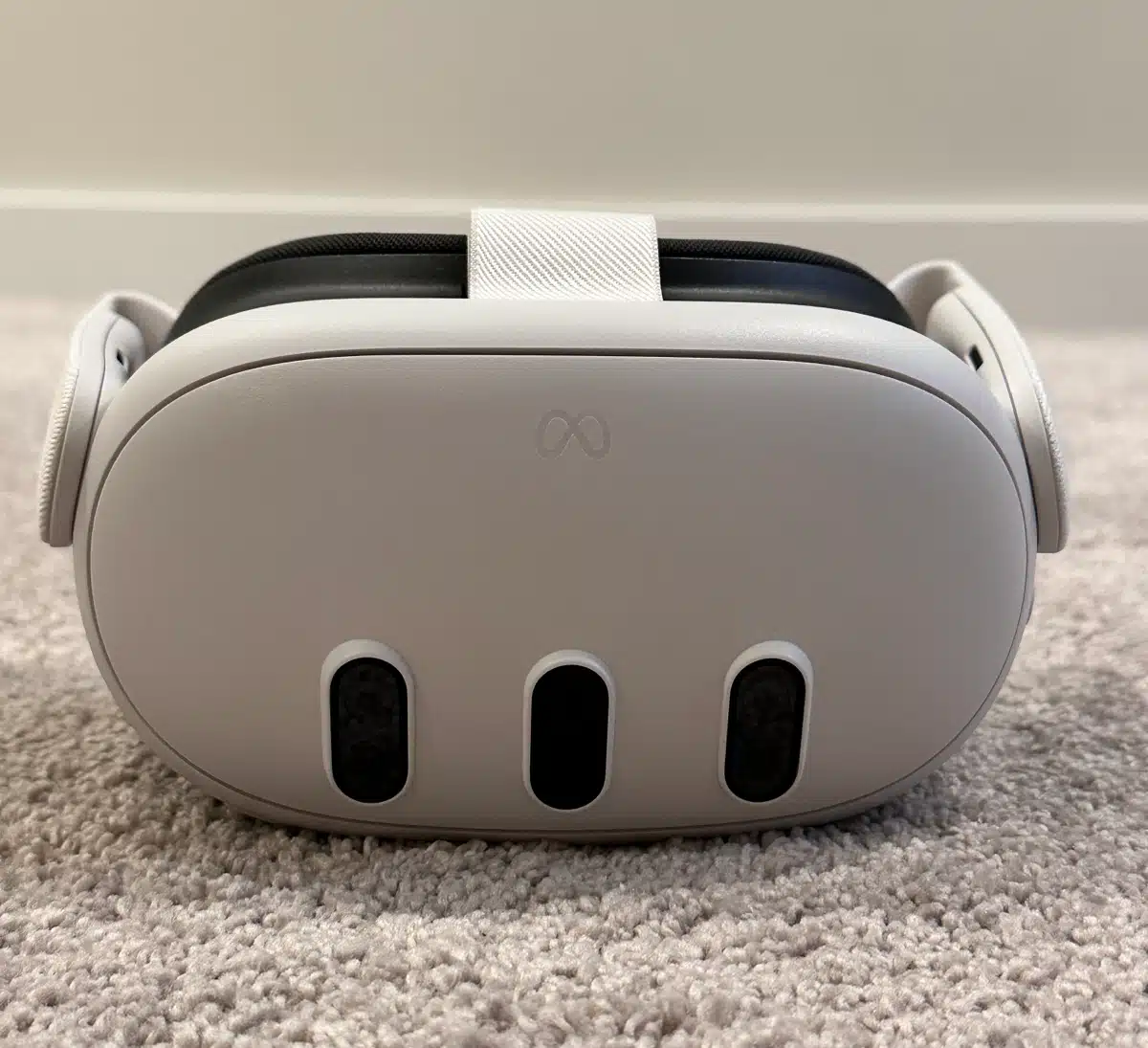
Meta Quest 3 is the headset I’d recommend to most people who want to try what Vision Pro does without spending Vision Pro money. For $599.99 you get full-color mixed reality, hand tracking, a pair of controllers, and the biggest library of VR games and fitness apps on any headset.
It won’t match Vision Pro’s image. The LCD panels look grayer in dark scenes than micro-OLED, and text isn’t as sharp. But in practice, I find Quest 3 more fun to use day to day, because there’s simply more to do on it. Beat Saber, Supernatural, and hundreds of mixed reality games are a tap away, and it streams PC VR games wirelessly too.
Meta Quest 3 Price
Meta Quest 3 costs $599.99 for the 512GB model at Meta. Controllers are included.
Meta Quest 3 vs Apple Vision Pro
Quest 3 costs about a sixth of the price, has a wider field of view (110 degrees), and plays far more games. Vision Pro has much better displays, far better eye and hand input, and a more premium build. At 515 grams, Quest 3 is also lighter than Vision Pro, though the weight sits on the front of your face. My Apple Vision Pro vs Meta Quest 3 comparison covers the rest, and my Meta Quest 3 review goes deeper on the headset itself.
Meta Quest 3 Pros
- A sixth of the price of Vision Pro
- Biggest VR and mixed reality game library
- Controllers included
- Wireless PC VR streaming with apps like Virtual Desktop
Meta Quest 3 Cons
- LCD displays aren’t as sharp or contrasty as micro-OLED
- No eye tracking
- Stock head strap is uncomfortable; most people buy an upgrade
- About 2 hours of battery life
Meta Quest 3S (Cheapest Apple Vision Pro Alternative)
If you just want to see what spatial computing is about, the Meta Quest 3S is the cheapest Apple Vision Pro alternative worth buying. At $349.99, it costs about a tenth of Vision Pro, and it runs every app and game Quest 3 does, with the same chip, the same controllers, and full-color passthrough.
The savings come from the lenses and screens. Quest 3S uses older Fresnel lenses and a lower-resolution display (1,832 x 1,920 per eye), so the image is softer and the sharp sweet spot in the middle is smaller. For games and fitness, that barely matters. For reading text or watching movies, you’ll notice it.
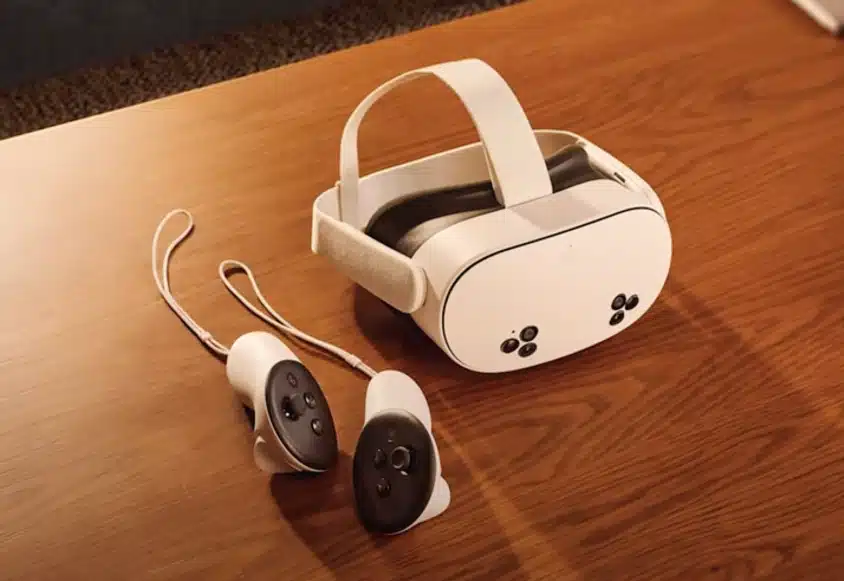
Meta Quest 3S Price
Meta Quest 3S costs $349.99 for 128GB or $449.99 for 256GB at Meta. It regularly goes on sale for less.
Meta Quest 3S vs Apple Vision Pro
This is the biggest price gap on the list: $349.99 against $3,699. Vision Pro is in a different league for image quality, input, and build, but Quest 3S gives you the same core idea of apps floating in your room, and far more games. If you’re torn between the two Quests, my Meta Quest 3S vs Quest 3 guide explains where the extra $250 goes.
Meta Quest 3S Pros
- The cheapest way into mixed reality at $349.99
- Same games, apps, and chip as Quest 3
- Controllers included
Meta Quest 3S Cons
- Softer image with a smaller sweet spot
- Fresnel lenses show more glare in high-contrast scenes
- Not a great choice for movies or text-heavy work
5. Play For Dream MR (Headset Most Like Apple Vision Pro)
Play For Dream MR is the headset most like Apple Vision Pro in both looks and specs, and that’s clearly on purpose. It has a glossy black front, dual 4K micro-OLED displays (3,840 x 3,552 per eye), eye tracking, hand tracking, and color passthrough, running on the same Snapdragon XR2+ Gen 2 chip as Galaxy XR.
The difference from Vision Pro is balance. Instead of a separate battery on a cable, Play For Dream puts its battery at the back of the head strap as a counterweight, like Quest Pro did. The whole thing weighs about 650 grams, but less of that sits on your cheeks, which makes a real difference in long sessions. It also streams SteamVR games wirelessly from a PC.
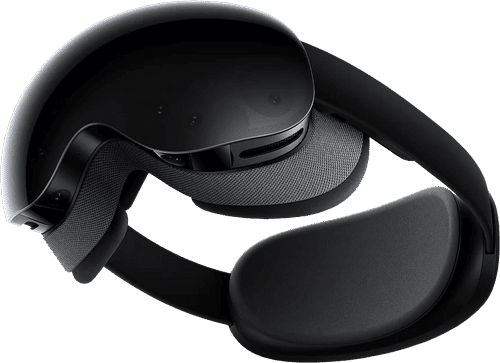
Play For Dream MR Price
Play For Dream MR costs $1,999 with controllers and 512GB of storage at Play For Dream’s store, which ships to the US.
Play For Dream MR vs Apple Vision Pro
Play For Dream matches Vision Pro’s display class for a bit more than half the price, and it includes controllers, which Apple doesn’t. Its Android-based software and app store are much thinner than visionOS, though, and it’s from a much smaller company, so long-term updates are a bigger unknown. Its rated battery life of about 3 hours is on par with Vision Pro’s video playback.
Play For Dream MR Pros
- Micro-OLED displays with eye and hand tracking
- Rear battery balances the weight better than Vision Pro’s front-heavy design
- Controllers and 512GB storage included
- Wireless SteamVR streaming for PC games
Play For Dream MR Cons
- Small app store compared to visionOS, Horizon OS, or Android XR
- Newer brand with less certain long-term support
- At $1,999, it costs more than Galaxy XR
Steam Frame (Best Apple Vision Pro Alternative for Windows and PC Gaming)
If your games live on Steam and your computer runs Windows, Valve’s Steam Frame is the Apple Vision Pro alternative that makes the most sense. It’s a standalone headset running SteamOS, but its real job is streaming your whole PC library, VR and flat-screen games alike, wirelessly through a dedicated 6GHz dongle that plugs into your PC.
At 440 grams with the battery on the back of the strap, it’s much lighter than Vision Pro. Playing flat-screen Steam games on what feels like a front-row cinema screen is something Vision Pro isn’t built for. It also has eye tracking for foveated rendering, which helps keep streaming sharp where you’re looking.
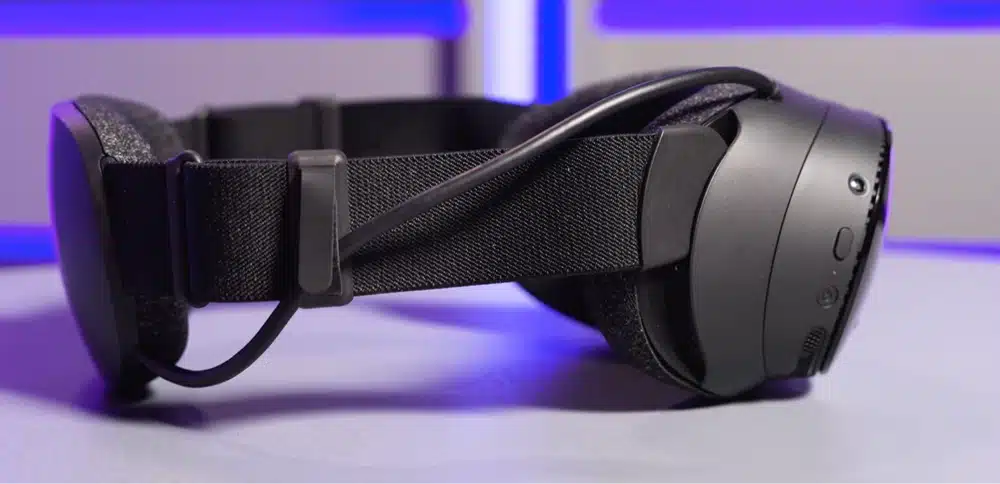
Steam Frame Price
Steam Frame starts at $1,059 for the 256GB kit, or $1,299 for 1TB. Both include the controllers, the PC streaming dongle, and Half-Life: Alyx. Budget another $59 for the Ergonomic Accessories Kit, which adds the top strap most people need. Valve launched it through a reservation system rather than open retail, so availability comes in waves.
Steam Frame vs Apple Vision Pro
These are built for different people. Steam Frame is a gaming headset that happens to be standalone; Vision Pro is a mixed reality computer that happens to play some games. Steam Frame costs less than a third of Vision Pro and plays vastly more games, but its LCD displays can’t match micro-OLED, its default passthrough is low-resolution grayscale, and battery life is only about 1 to 1.5 hours. My Steam Frame review covers it in detail.
Steam Frame Pros
- Best wireless PC VR streaming of any headset
- Plays your entire Steam library, including flat-screen games
- Light at 440 grams, with a rear battery
- Expandable storage
Steam Frame Cons
- About 1 to 1.5 hours of battery life
- Grayscale passthrough unless you buy the $150 camera upgrade
- Top strap sold separately
- Limited availability through Valve’s reservation system
Bigscreen Beyond 2e (Best Lightweight PC VR Headset for Movies)
Bigscreen Beyond 2e is the lightest VR headset you can buy, at 108 grams before the strap. It uses micro-OLED displays (2,560 x 2,560 per eye) with a wide 108-degree horizontal field of view, and the “e” model adds eye tracking. For watching movies in a virtual theater or long sim racing sessions, nothing else on this list is as comfortable on your face.
The trade-off is that it’s a PC VR headset in the purest sense. It plugs into a gaming PC with a DisplayPort cable, and it needs SteamVR base stations and controllers for tracking, which aren’t included. There’s no passthrough and no hand tracking. You’re buying the best possible screen on your face, not a spatial computer.
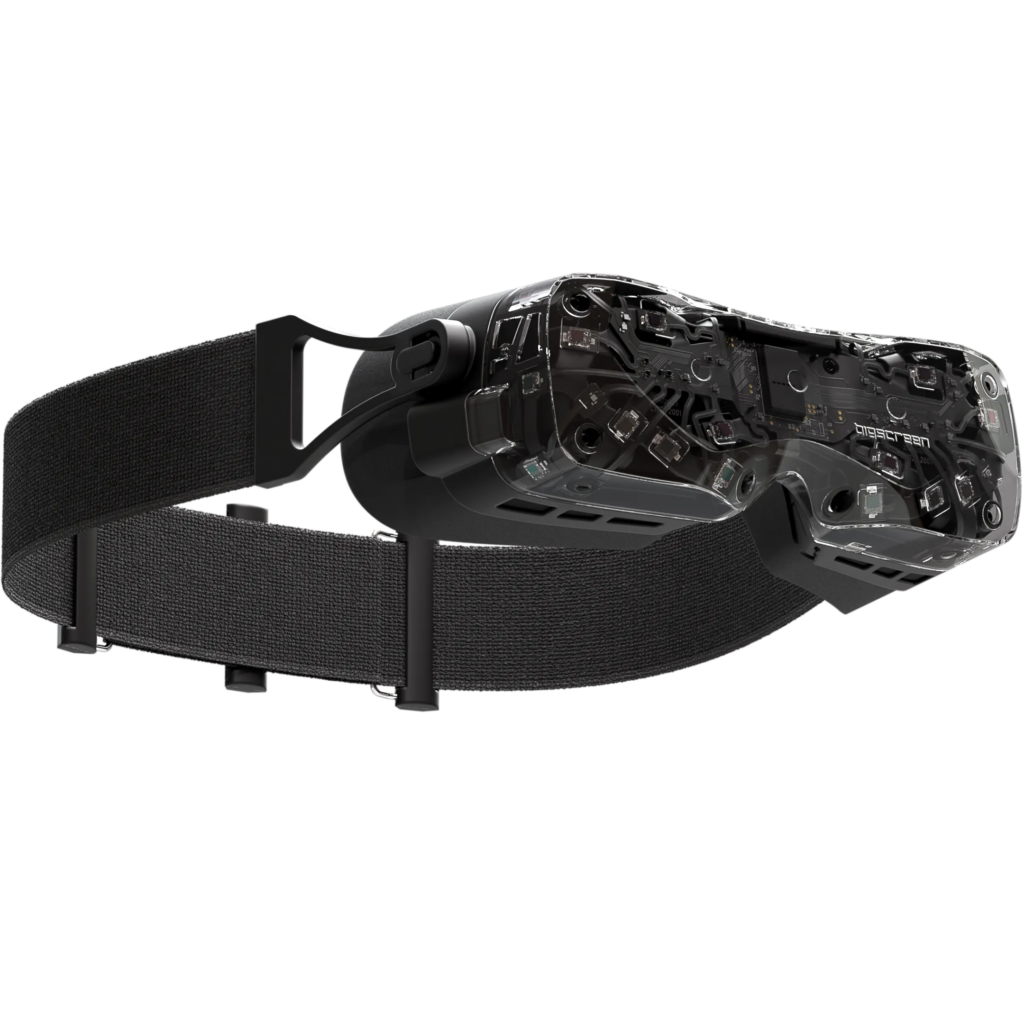
Bigscreen Beyond 2e Price
Bigscreen Beyond 2e costs $1,159, and the Beyond 2 without eye tracking is $959, both at Bigscreen’s store. Both now ship with a Universal-Fit Cushion; a Custom-Fit Cushion made from a 3D scan of your face is an upgrade. Base stations and controllers can add several hundred dollars if you don’t already own them.
Bigscreen Beyond 2e vs Apple Vision Pro
Both use micro-OLED, but the Beyond 2e weighs about a seventh as much and has a wider field of view. Vision Pro is standalone with passthrough, apps, and hand tracking; the Beyond 2e does none of that without a PC and base stations. If you already own a gaming PC and SteamVR tracking gear, it’s a lot of headset for the money. The Bigscreen app itself is a great way to watch movies with friends; see my Bigscreen VR guide.
Also consider: Pimax Dream Air SE ($899) is another small micro-OLED PC VR headset with eye tracking, and it’s cheaper than the Beyond 2e.
Bigscreen Beyond 2e Pros
- Lightest VR headset available at 108 grams
- Micro-OLED displays with a wide field of view
- Eye tracking included on the 2e model
Bigscreen Beyond 2e Cons
- Needs a gaming PC, SteamVR base stations, and controllers
- No passthrough or hand tracking
- Not standalone, so no apps or movies without your PC
XREAL One Pro (Best Apple Vision Pro Glasses Alternative for Work)
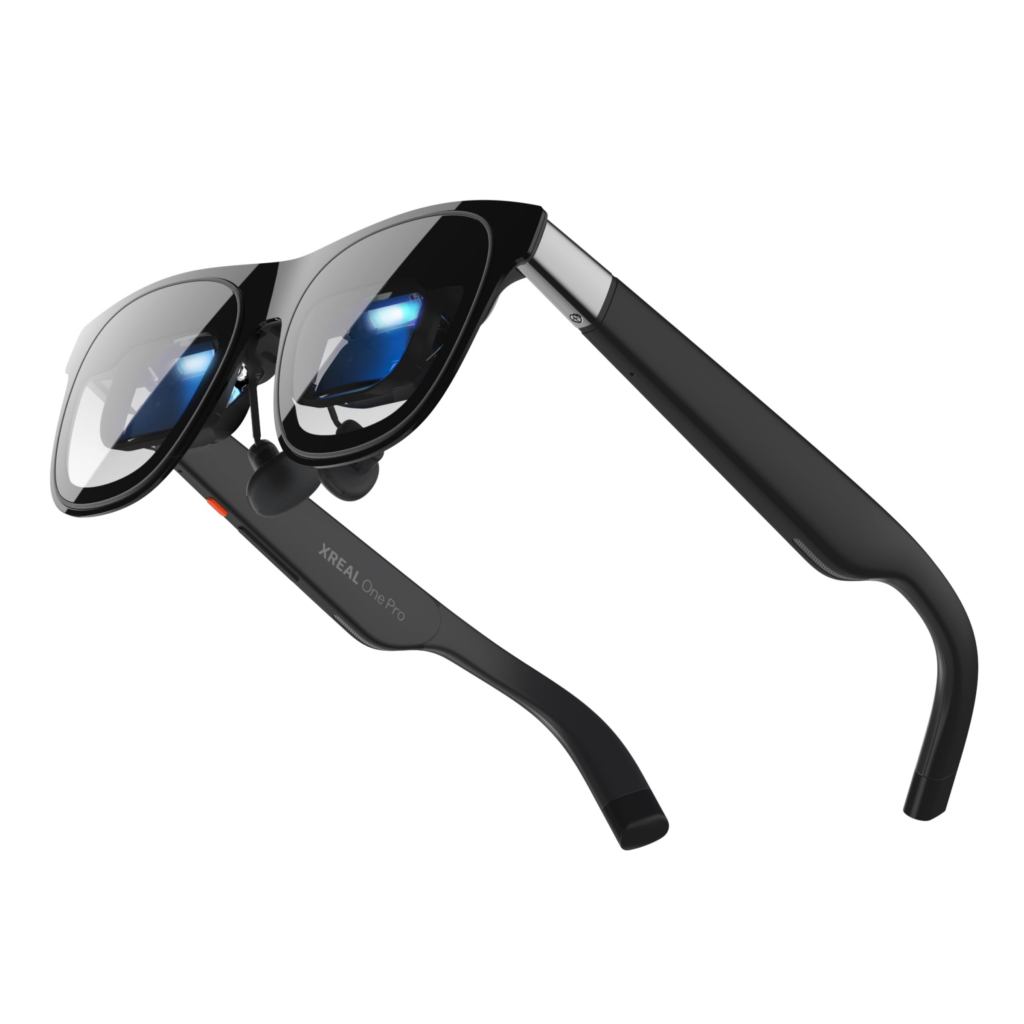
XREAL One Pro is a different kind of Apple Vision Pro alternative: a pair of 87-gram glasses that shows a giant virtual screen, up to 171 inches, for whatever device you plug in. There’s no app store and no mixed reality. You plug it into a laptop, iPhone 15 or newer, Android phone, Steam Deck, or anything else with USB-C video out, and it becomes your monitor.
That’s exactly what I use Vision Pro for most of the time, which is why these glasses make so much sense as a replacement. The built-in X1 chip keeps the screen pinned in place when you turn your head, the Sony micro-OLED panels are sharp and bright at 120Hz, and the speakers are tuned by Bose. They fold into a case that fits in a jacket pocket, so they’re easy to take on a plane.
XREAL One Pro Price
XREAL One Pro costs $599 at Amazon and XREAL’s own store.
XREAL One Pro vs Apple Vision Pro
The One Pro weighs 87 grams against Vision Pro’s 750 to 800, costs a sixth of the price, and has no battery to charge because it runs off whatever it’s plugged into. But its 57-degree field of view is far narrower, it has no apps or hand tracking of its own, and it only anchors the screen in 3DoF (it follows your head rotation, not your movement around the room). For a laptop screen on the go, it’s the better tool. For immersive video and mixed reality, it isn’t close. My XREAL One Pro review has the details.
XREAL One Pro Pros
- 87 grams, and it folds like sunglasses
- Giant virtual screen for laptops, phones, and handhelds
- No battery to charge
- Costs about the same as a Quest 3, and a sixth of Vision Pro
XREAL One Pro Cons
- 57-degree field of view
- No apps, mixed reality, or hand tracking on its own
- Needs a device with USB-C video output
Viture Beast (Best Glasses Like Apple Vision Pro for Movies and Travel)
Viture Beast is the other pair of glasses I’d consider, and it edges out XREAL for movies. It has the widest field of view of any display glasses at 58 degrees, 1,920 x 1,200 Sony micro-OLED panels rated at 1,250 nits, and nine levels of electrochromic dimming. That brightness keeps the picture watchable in a sunny room, and at the darkest tint setting, the outside world mostly disappears, which is what you want on a plane.
It weighs 88 grams with an aluminum-magnesium frame and Harman-tuned speakers. Like the One Pro, it works with anything that outputs USB-C video, including iPhones, Macs, Steam Deck, and Nintendo Switch through a dock. Viture has also added a front camera and says 6DoF tracking is coming in a software update, which would let you walk around a pinned screen.
Viture Beast Price
Viture Beast costs $549 at Viture, Amazon, and Best Buy.
Viture Beast vs Apple Vision Pro
The Beast gives you a big, bright personal cinema for about a seventh of Vision Pro’s price and about a ninth of its weight. It can’t do mixed reality, apps, or immersive 3D environments the way Vision Pro can. If most of your Vision Pro time would be spent watching movies, the Beast gets you most of the way there. For more options, see my list of the best augmented reality glasses.
Viture Beast Pros
- Widest field of view of any display glasses (58 degrees)
- Very bright, with 9-level electrochromic dimming
- $50 cheaper than XREAL One Pro
Viture Beast Cons
- 6DoF tracking depends on a promised software update
- No apps or mixed reality on its own
- Needs a device with USB-C video output
Glasses Like Apple Vision Pro: What AR Glasses Can and Can’t Do
A lot of people search for glasses like Apple Vision Pro, so it’s worth being clear about what today’s display glasses are. XREAL One Pro and Viture Beast are wearable monitors. They show one big screen from the device you plug in, and they’re excellent at that. They don’t run their own apps, place windows around your room, or track your hands.
That’s starting to change. XREAL Aura (below) runs Android XR, so it will have its own apps and a wider view, and Meta VR Glasses are a full VR headset in a glasses shape. If you want a screen for travel today, buy the glasses. If you want Vision Pro’s apps-in-your-room experience, get a headset.
Best Apple Vision Pro Alternatives for Mac Users
If you’re buying Vision Pro mainly for Mac Virtual Display, the glasses are the easiest swap. Plug XREAL One Pro or Viture Beast into any USB-C Mac and it sees them as an external display, with no software to install.
Meta says Meta VR Glasses work as a virtual display for both Mac and PC, and they accept USB-C video directly. On Meta Quest 3 and 3S, you stream your Mac’s screen with apps like Virtual Desktop or Immersed. That works well over good Wi-Fi, but it takes more setup than Apple’s version.
Vision Pro is still the smoothest Mac companion, since it connects just by looking at your Mac. My Apple Vision Pro work from home setup shows how I use it. But for a portable second screen, $549 to $599 glasses get you surprisingly close.
Upcoming Apple Vision Pro Competitors Worth Waiting For
XREAL Aura
XREAL Aura is XREAL’s first pair of Android XR glasses, launching this fall in the US, UK, Canada, South Korea, and Japan. XREAL has promised the base model won’t cost more than $1,500. Unlike the One Pro, Aura runs its own apps through Android XR with Gemini built in, and it has a wider 70-degree field of view. It could be the first pair of glasses that does what Vision Pro does in a much smaller package.
vivo Vision
vivo Vision is a Vision Pro look-alike from the Chinese phone maker, running Android and weighing much less than Apple’s headset. So far it’s only been available as an in-store demo in China, with vivo suggesting a price of around ¥10,000 (about $1,400). There’s no confirmed US release.
Will Apple Vision Pro Get Cheaper? What We Know About Apple Vision Air
Not soon. Apple just raised the price by $200 to $300 in June, so the current Vision Pro is more expensive than when it launched.
A cheaper model is rumored, though. Analyst Ming-Chi Kuo expects an Apple Vision Air in 2027, about 40% lighter than Vision Pro and more than 50% cheaper, which would put it somewhere around $1,800 or less. Apple hasn’t announced it. If you want a lighter, cheaper headset in 2027, Meta VR Glasses are the one with a confirmed price and date.
Should You Buy a Used or Refurbished Apple Vision Pro Instead?
A used Vision Pro is a reasonable way to save money if you’re set on Apple. Apple’s certified refurbished store lists Vision Pro occasionally, but stock comes and goes, so set an alert. Used M2 models regularly sell well under retail on marketplaces like eBay and Swappa.
A few things to check before you buy:
- The Light Seal is sized to your face. If the seller’s size doesn’t fit you, a new one costs extra.
- ZEISS prescription inserts are made for the original owner’s eyes, so plan on buying your own.
- The newer M5 model has a faster chip, a slightly longer battery life, and the more comfortable Dual Knit Band than the M2.
- Ask whether AppleCare is still active and transferable.
If you do go with a Vision Pro, my guides to the best Apple Vision Pro accessories and my full Apple Vision Pro review will help.
Frequently Asked Questions
Is there a cheaper alternative to Apple Vision Pro?
Yes. Samsung Galaxy XR ($1,799.99) is the closest match you can buy today, Meta Quest 3 ($599.99) is the best value, and Meta VR Glasses ($1,299.99) arrive in spring 2027.
What is the cheapest Apple Vision Pro alternative?
Meta Quest 3S at $349.99. It runs the same apps and games as Quest 3, with a softer display.
Is Meta Quest 3 better than Apple Vision Pro?
For games and value, yes. Quest 3 costs a sixth of the price and has a much bigger game library. Vision Pro has far better displays, input, and Mac integration.
Is Galaxy XR better than Vision Pro?
It’s lighter, half the price, and better if you use Android or Windows. Vision Pro has more polished software, better passthrough, and deeper Apple integration.
Is there an Apple Vision Pro alternative for Android?
Samsung Galaxy XR is the best Android alternative, with Google Play apps and Gemini built in. XREAL One Pro and Viture Beast also work with Android phones that support USB-C video out.
Is there an Apple Vision Pro alternative for Windows?
Steam Frame is the best pick for Windows gaming PCs. Meta Quest 3 and Meta VR Glasses also work as virtual monitors for Windows.
Is PSVR2 a good Apple Vision Pro alternative?
Not really. PlayStation VR2 is a gaming headset that needs a PS5 (or a PC with Sony’s adapter), and it has no standalone apps or mixed reality. It’s great for PS5 games, but it isn’t a replacement for what Vision Pro does.
Is Apple Vision Pro worth it?
Only if you’re deep in Apple’s ecosystem and the $3,699 price doesn’t hurt. For most people, one of the alternatives above does what they’d actually use it for at a fraction of the cost.
Which of These Apple Vision Pro Alternatives Should You Buy?
Pick the one that matches how you’d use it:
- Meta VR Glasses if you want the best overall and can wait
- Samsung Galaxy XR if you want a Vision Pro-class headset today, and you use Android
- Meta Quest 3 if you want the best value and lots of games
- Meta Quest 3S if you want the cheapest way in
- Play For Dream MR if you want the most Vision Pro-like design and display
- Steam Frame if you game on a Windows PC
- Bigscreen Beyond 2e if you want the lightest headset for PC VR and movies
- XREAL One Pro if you want a big screen for work and travel
- Viture Beast if you mainly want movies on the go
If I were buying today with Vision Pro money in my pocket, I’d get a Quest 3 for games plus a pair of display glasses for travel, and still have more than $2,400 left over. Then I’d take a hard look at Meta VR Glasses when they launch next spring. For more headset options, see my guide to the best VR headsets.