
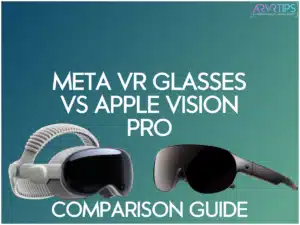
Meta VR Glasses vs Apple Vision Pro is the matchup a lot of people have been waiting for: a $1,299 pair of VR glasses, against Apple’s $3,699 headset.
I own a Vision Pro and got an early demo of Meta VR Glasses, so this comparison covers the specs, the price, and how the two actually feel on your face.
(If you’re looking for the Ray-Ban Meta smart glasses instead, those are a different product; see my guide to every Meta glasses model.)
Quick Verdict: Meta VR Glasses vs Apple Vision Pro
Choose Meta VR Glasses if you want a lighter, cheaper headset for movies, games, and working on a big virtual screen, and you can wait until spring 2027. It’s sharper per degree, a fraction of the weight, and plays the entire Quest game library.
Choose Apple Vision Pro if you want the best mixed reality experience available today, the widest field of view, and tight integration with your Mac, iPhone, and Apple apps, and the price isn’t the deciding factor.
I’ll go into full detail on Meta VR Glasses vs Apple Vision Pro below!
Meta VR Glasses vs Apple Vision Pro Specs: Side-by-Side Comparison
| Spec | Meta VR Glasses | Apple Vision Pro (M5) |
|---|---|---|
| Price | $1,299.99 | $3,699 |
| Availability | Spring 2027 | Available now |
| Weight on your head | About 100g | 750 to 800g |
| Battery or compute pack | 300g puck (chip and battery) | 353g battery |
| Display | Micro-OLED, 2,412 x 2,288 per eye | Micro-OLED, 23 million pixels total |
| Sharpness | 37 pixels per degree | About 34 pixels per degree |
| Field of view | 70° horizontal, 88° diagonal | About 100° horizontal |
| Refresh rate | Up to 120Hz | 90, 96, 100 or 120Hz |
| Chip | Snapdragon Reality Elite (XR2 Gen 3) | Apple M5 and R1 |
| Memory and storage | 12GB RAM, 128GB plus microSD up to 1TB | 16GB, 256GB to 1TB |
| Battery life | About 3 hours | Up to 2.5 hours general use, 3 hours video |
| IPD range | 56 to 70mm | 51 to 75mm |
| Input | Eye and hand tracking, optional Touch Plus controllers | Eye and hand tracking, optional PS VR2 Sense controllers |
| Prescription | Magnetic Zenni inserts | ZEISS Optical Inserts |
| Operating system | Horizon OS (same as Quest) | visionOS |
Meta VR Glasses vs Apple Vision Pro Price & Release Date
Meta VR Glasses Price: $1,299.99, and What It Really Costs
Meta VR Glasses cost $1,299.99 in the US. That includes the glasses, the compute puck, and a 45W USB-C charger. Two things add to the real cost: Touch Plus controllers aren’t in the box (you’ll need them for most existing Quest games, though you can reuse a pair from a Quest 3), and prescription inserts are extra. A microSD card is optional since there’s 128GB built in.
Meta VR Glasses Release Date: Spring 2027
Meta says the VR Glasses go on sale in spring 2027 in the US, UK, Canada, much of Europe, Japan, Korea, Taiwan, Singapore, Australia, and New Zealand. There’s no pre-order date yet.
Apple Vision Pro Price Increase: Why It Now Costs $3,699
Apple Vision Pro launched at $3,499, and the M5 model kept that price until Apple raised it to $3,699 in June 2026 amid rising memory costs. That’s for the 256GB model; 512GB and 1TB cost more, and ZEISS prescription inserts are extra. Even before accessories, Vision Pro costs almost three times as much as Meta VR Glasses.
Meta Phoenix Is Meta VR Glasses: What the Codename Means
If you’ve been following leaks about “Meta Phoenix,” this is it. Phoenix was the internal codename for the headset Meta launched at Connect as Meta VR Glasses. Early rumors about the Phoenix release date, price, and FOV turned out to be close: it’s a lightweight headset with a separate compute puck, priced at $1,299.99, shipping in spring 2027, with a 70-degree horizontal field of view.
Apple Vision Pro Weight vs Meta VR Glasses Weight: 750g vs 100g
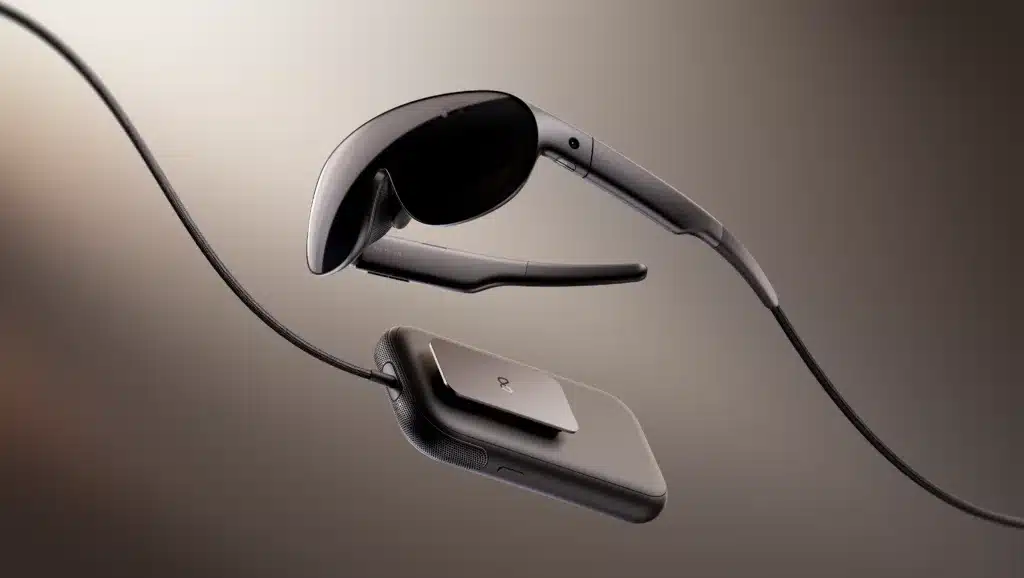
This is the biggest difference between the two. Apple Vision Pro weighs 750 to 800 grams (about 1.7 pounds) on your head, plus a 353-gram battery in your pocket. Meta VR Glasses weigh about 100 grams on your head, with a 300-gram puck holding the chip and battery. That makes Meta VR Glasses among the smallest VR glasses you can buy.
With my Vision Pro, weight ends most sessions before the battery does. That much weight sits on your cheeks and forehead, and even the Dual Knit Band only spreads it out. Meta VR Glasses put about one-eighth of that weight on your face. They fold like regular glasses, use adjustable nose pads instead of a head strap, and come in small and large sizes. The trade-off is fit: with so little holding them in place, getting the right size matters, and reviewers found the small size could pinch.
Meta VR Glasses Resolution vs Apple Vision Pro Resolution: 37 PPD vs 34 PPD
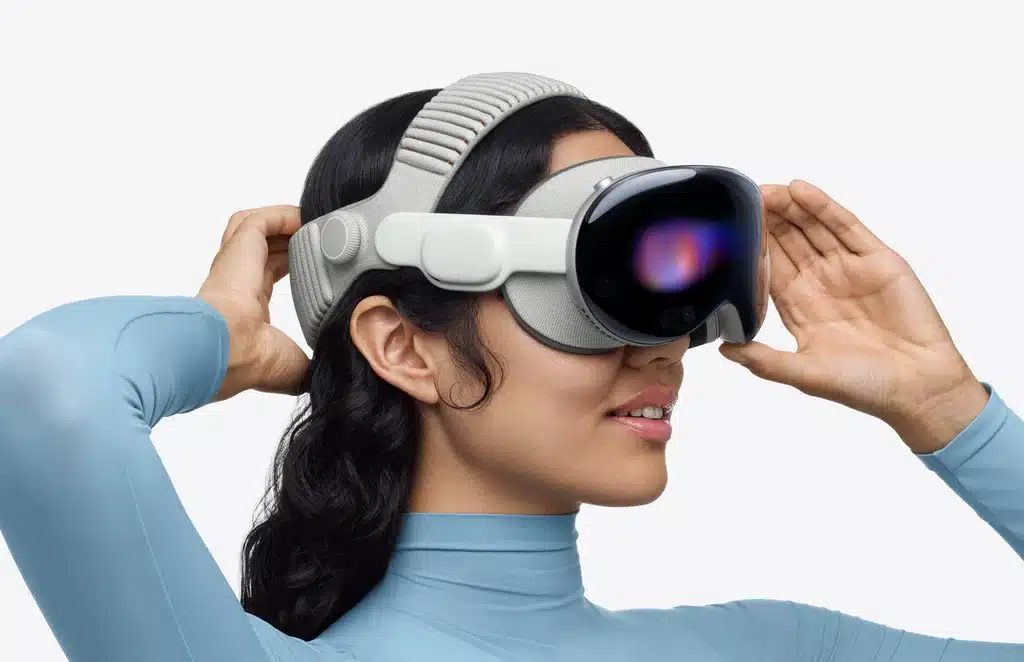
Both headsets use micro-OLED displays, which means deep blacks and rich color. Meta VR Glasses run 2,412 x 2,288 pixels per eye at 37 pixels per degree, while Vision Pro packs 23 million pixels across both eyes at about 34 pixels per degree. In practice, Meta’s image is a touch sharper for small text, because it spreads its pixels over a smaller field of view.
Apple Vision Pro Field of View vs Meta VR Glasses FOV
That smaller field of view is the catch. Apple Vision Pro shows about 100 degrees horizontally, while Meta VR Glasses show 70 degrees horizontally (88 diagonally). Vision Pro feels more like being inside the scene; Meta VR Glasses feel more like looking through a large window.
For movies and virtual monitors, the narrower view barely matters. For games and immersive environments, you’ll notice the edges more on Meta. Meta also sells an optional light blocker that clips in to block out the room around you.
Meta VR Glasses Battery Life vs Apple Vision Pro Battery Life
Meta rates VR Glasses at about 3 hours of mixed use or media playback per charge. Apple rates Vision Pro M5 at up to 2.5 hours of general use and up to 3 hours of video. Both can run while plugged in, and Meta VR Glasses support fast charging during use.
So battery life is close to a tie. Either one gets you through a full-length movie. Neither lasts a full workday without a cable, so for long productivity sessions you’ll want to sit near an outlet with either headset.
Meta VR Glasses Games vs Apple Vision Pro Games: The Quest Library Wins
For gaming, Meta VR Glasses win easily. They run Horizon OS, the same software and store as Quest, so the entire Quest library of VR games works on them. Meta says more than 75 games and apps built for hand tracking will be ready at launch, including Tetris Effect in mixed reality, Phoenix Wright: Ace Attorney, Two Point Hospital, Supernatural, and a new hand-tracked Beat Saber mode called Flux.
Meta also has the Sidequest VR third-party store, which adds over 1,000 additional games and utilities to try. This should be getting a big upgrade to support the new Meta VR Glasses.
See the best Sidequest VR games here
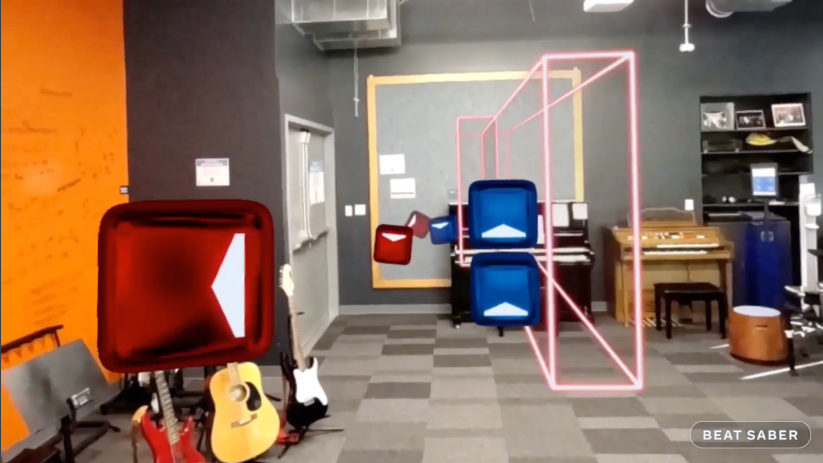
Vision Pro has good games, including Apple Arcade titles and a growing list of spatial games, but its library is a fraction of Quest’s. It’s also missing most of the big VR hits people buy a headset for. If gaming is a big part of why you want a headset, Meta VR Glasses are the clear pick. My Beat Saber guide covers the game that’ll likely be most people’s first download.
Controllers: Meta Touch Plus vs Apple Vision Pro PS VR2 Controllers
Both headsets are controller-free out of the box, using eye tracking and hand gestures. Meta VR Glasses support Meta’s Touch Plus controllers for traditional Quest games, sold separately. Vision Pro now supports Sony’s PlayStation VR2 Sense controllers, also sold separately, but far fewer Vision Pro games are built for them.
Can You Watch Netflix on Apple Vision Pro or Meta VR Glasses? Movies and Streaming Apps Compared
Netflix has no native app on either headset. On Vision Pro, Netflix’s official route is the Safari browser, but some owners have run into an “app required” message; signing out and back in, or using a third-party app like Supercut, are the common workarounds. On Meta VR Glasses, Netflix isn’t part of the launch lineup, and the old Quest Netflix app was discontinued, so the browser is the likely route there too.
Beyond Netflix, both are excellent movie machines. Vision Pro has native apps for Apple TV, Disney+, Max, and more, plus Apple Immersive Video. Meta VR Glasses launch with Disney+, HBO Max, Peacock, Paramount+, YouTube, and Prime Video, 3D movies like Avengers: Infinity War and Star Wars, an IMAX Enhanced certification, and Dolby Atmos audio.
For watching movies on a huge virtual screen, the two are closer than the price gap suggests.
Apple Vision Pro for Work vs Meta VR Glasses: Mac and PC Virtual Displays
Apple Vision Pro is still the better work headset if you use a Mac. Mac Virtual Display turns your Mac into a huge, sharp screen (including an ultrawide option) just by looking at it, and your iPhone and iPad apps, keyboard, and trackpad all work alongside visionOS apps. I cover my setup in my Apple Vision Pro work from home guide.
Meta VR Glasses take a more open approach. They work as a virtual display for both Mac and PC, mirror your phone, connect Bluetooth keyboards and gamepads, and support full DisplayPort Alt Mode, so you can plug in a laptop, console, or other USB-C video source and see it on a giant screen. The lighter weight also makes long work sessions easier on your neck.
Do You Need a PC for Meta VR Glasses?
No. Meta VR Glasses are standalone. The compute puck runs everything, so you don’t need a PC, a phone, or a console. A PC is only needed if you want to use it as a virtual monitor for your computer.
Meta VR Glasses Prescription Lenses vs Apple Vision Pro ZEISS Inserts
Neither headset lets you wear your regular glasses inside it. Vision Pro uses ZEISS Optical Inserts that click in magnetically, ordered through Apple with your prescription. Meta VR Glasses use magnetic prescription inserts from Zenni Optical, which also snap on and are easy to swap if you share the headset. If you wear glasses full time, factor the inserts into the price of either one.
Is Apple Vision Pro AR or VR? Passthrough and Mixed Reality Compared
Both are mixed reality headsets. They’re VR devices at heart, but their cameras show you the room around you in full color (called passthrough), so you can place apps and screens in your real space. Vision Pro’s passthrough is the most convincing I’ve used, and features like EyeSight (which shows your eyes to people around you) and Persona avatars make it feel more present in the room.
Meta VR Glasses use six external cameras for color passthrough with autofocus and depth sensing. Early hands-on reports called it the best passthrough yet on a standalone headset, with no warping or visible seams. Neither is true AR like see-through glasses, since you’re always looking at displays, not through clear lenses.

Best Apple Vision Pro Alternatives: Meta VR Glasses vs Quest 3, Galaxy XR and Steam Frame
If you’re shopping for an Apple Vision Pro alternative, Meta VR Glasses are the most direct one, but they’re not the only option.
| Headset | Price | Best for |
|---|---|---|
| Meta VR Glasses | $1,299.99 (spring 2027) | Lightweight movies, games, and work |
| Apple Vision Pro | $3,699 | Best mixed reality and Mac integration |
| Samsung Galaxy XR | $1,799 | Android XR and Google apps |
| Steam Frame | From $1,059 | PC VR and SteamVR games |
| Meta Quest 3 | $499 | Best value for VR gaming |
Meta VR Glasses vs Meta Quest 3
Quest 3 costs a fraction of the price and has a wider field of view (110 degrees vs 70), which makes games feel more immersive. Meta VR Glasses are much sharper (37 vs about 20 pixels per degree), far lighter, and better for movies and work. If you mainly play games, Quest 3 is still the smarter buy; see my Meta Quest 3 review.
Meta Phoenix vs Steam Frame
Steam Frame is Valve’s headset for PC gamers who want to stream SteamVR games wirelessly. Meta VR Glasses are the better standalone device with a far lighter design; Steam Frame is the better pick if your games live on Steam. My Steam Frame vs Meta Quest 3 comparison goes deeper on Valve’s headset.
Apple Vision Pro vs Galaxy XR
Samsung Galaxy XR is the closest thing to a Vision Pro on Android, at about half the price, with Google apps and Gemini built in. Meta VR Glasses undercut it on price and weight but won’t be out until next spring. I compare the two in Samsung Galaxy XR vs Apple Vision Pro M5.
Is Apple Vision Pro Worth It in 2026, or Should You Wait for Meta VR Glasses?
If you already live in Apple’s ecosystem and want the best mixed reality headset right now, Apple Vision Pro is still worth it in 2026, but only if the $3,699 price doesn’t hurt. Its field of view, passthrough, and Mac integration are still the best available.
For most people, waiting for Meta VR Glasses makes more sense. You’ll pay about a third of the price for a sharper, far lighter headset that plays thousands of VR games and handles movies and work almost as well. The main risk is timing: spring 2027 is months away, and Meta hasn’t opened pre-orders.
Choose Meta VR Glasses If… / Choose Apple Vision Pro If…
Choose Meta VR Glasses If…
- You want the lightest, most comfortable headset for long sessions
- You play VR games or want access to the Quest library
- You use a Windows PC or want to plug in consoles and laptops
- You’d rather spend $1,299 than $3,699
- You can wait until spring 2027
Choose Apple Vision Pro If…
- You want the widest field of view and the most immersive experience
- You use a Mac, iPhone, and iPad every day
- You want the best passthrough and features like EyeSight and Persona
- You want a headset today, not next year
Frequently Asked Questions
Can you pre-order Meta VR Glasses?
Not yet. Meta has announced a spring 2027 release at $1,299.99, but pre-orders haven’t opened.
Is Meta VR Glasses the same as Meta Phoenix?
Yes. Phoenix was the codename for the headset Meta launched as Meta VR Glasses at Connect.
Is Meta VR Glasses the same as Ray-Ban Meta glasses?
No. Ray-Ban Meta glasses are camera and audio smart glasses without a VR display. Meta VR Glasses are a full VR headset shaped like glasses.
Is the Meta VR Glasses puck wireless?
No. The glasses connect to the compute puck with an optical cable. The puck can clip to a pocket or sit on a table.
Can you wear glasses with Meta VR Glasses or Apple Vision Pro?
Not inside them. Both use magnetic prescription inserts instead: Zenni inserts for Meta VR Glasses and ZEISS inserts for Vision Pro.
What’s the difference between Apple Vision Pro M5 and M2?
The M5 model has a faster chip, renders more pixels, supports refresh rates up to 120Hz, lasts about 30 minutes longer on battery, and ships with the more comfortable Dual Knit Band.
Is Apple Vision Pro heavier than Meta VR Glasses?
Yes, by a lot. Vision Pro weighs 750 to 800 grams on your head, while Meta VR Glasses weigh about 100 grams.
Final Verdict: Meta VR Glasses vs Apple Vision Pro
In the Meta VR Glasses vs Apple Vision Pro matchup, Meta wins on price, weight, sharpness, and games, while Apple wins on field of view, passthrough, polish, and Mac integration. Apple Vision Pro is the better headset you can buy today. Meta VR Glasses look like the better headset for most people, if you can wait until spring 2027.
If you’re buying a Vision Pro now, my best Apple Vision Pro apps and Apple Vision Pro accessories guides will help you get the most out of it.